Welcome to Mike Hughes' Blacklist Blog

The Blogger
Mike is the author of "Spies at Work" the first detailled history history first published by 1 in 12 publications in 1993. He revised and reissued it in 2012 after the prosecution of The Consulting Association for break the Data Protection Act and in advance of the major group legal action action against Construction Giants which saw £75m paid in compensation and cost the firms at least £200m. Mike was a witness for the claimants. Since, then in 2024, two further volumes, "Inside the Economic League", and "Attlee's Industrial Purge" have been added to create what he calls the "Spies at Work" family of histories, they are each available as an e book from Lulu for the less than the price of a quality Sunday newspaper.He has publishes and edited the webpage https://spiesatwork.org.uk/ which is a major resource of original documents for political and labour historians,
MAKGILL
1868-1926
The Untold Story of the
World’s First Para-politician
On this day, October 17, one hundred years ago, the world’s first para-politician died. Like para-politicians ever since, George Makgill had been spectacularly on the wrong side of history.
By the time Mussolini and the Fascisti, and Hitler and the Nazis, were dead and defeated, it seems no-one who had been associated with him – by birth or political activism – wanted to see his memory preserved or his political meddling recalled.
In this centenary blog, investigative historian, Mike Hughes, who has spent decades researching Makgill and the organisations he was associated with, tries to make sense of the false assumptions that litter the telling of his story.
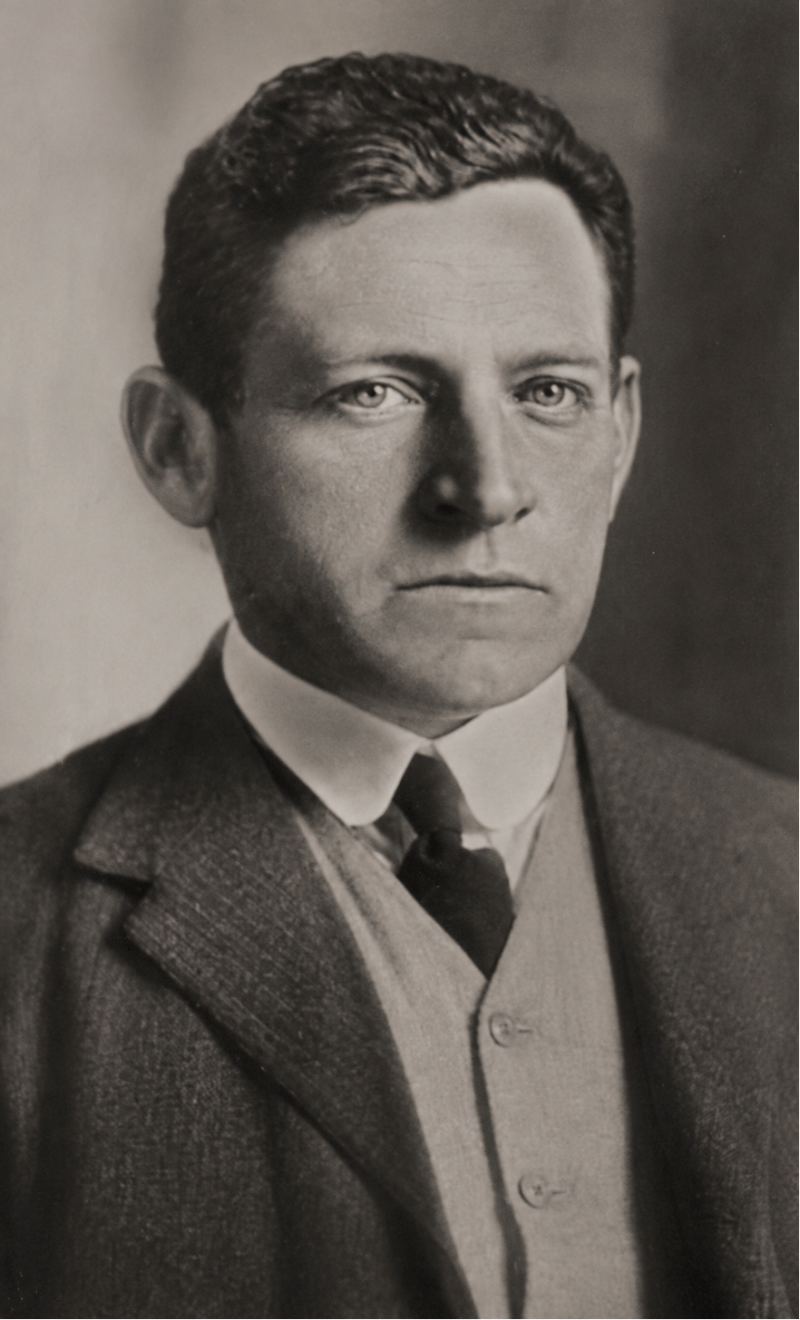
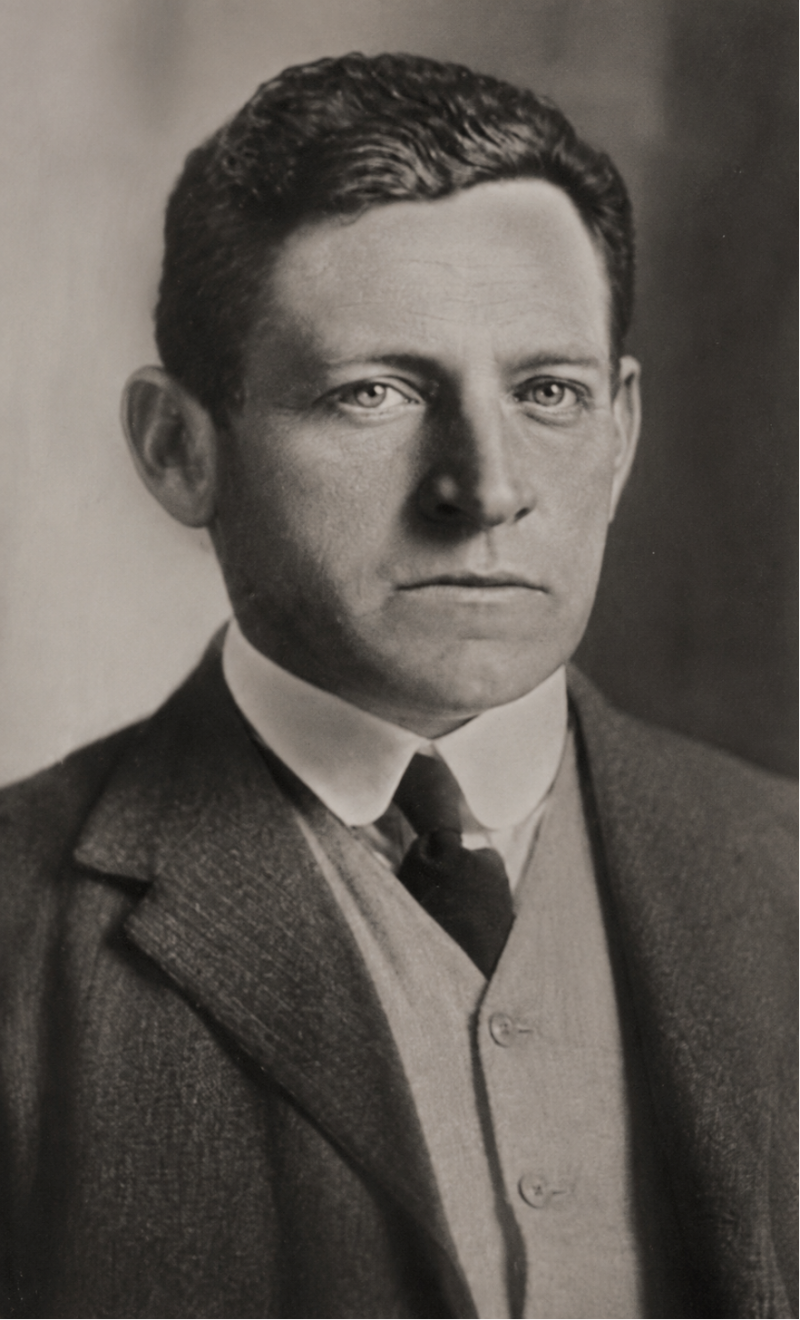
(Illustration; AI rendering by Mike Hughes from a rare, poor mechanically reproduced newspaper illustration)
The Real Backstory
Before the MPs elected in the 1918 General Election in the UK had taken their seats in 1919 there was either no para-politics, or all politics was para-political. Like everything “para”, para-politics are like - but not, in this case like - but not politics. The Representation of the People Act 1918 made the difference; it had introduced into the UK something approaching a universal franchise. This left room for some elected politicians, civil servants and people of influence to carry out para-political activity that was not in the interests, or the eyeline of the majority of the new electorate. By contrast the government that had taken Britain and its empire into the First World War was elected by 5 million predominantly comfortably off British men.
The practice of para-politics requires the joint enterprise of these three sorts of people. But he real para-politicians would be the people of influence pursuing their political objectives, without the inconvenience of getting elected, or being managed by people who had got themselves elected. It is a profoundly conspiratorial and subversive approach, which may explain why most para-politicians, from Sir George Makill onwards, have loudly proclaimed the conspiracies and subversions of their political targets and enemies.
Makgill was born into the landed gentry in Scotland in 1868. He shared the sense of entitlement, and all the casual racist and conservative prejudices of his class and was not exceptional in that. Although a landowner, he was not exceptionally wealthy or influential. He was politically a non-entity for the first forty-seven years of his life. Despite this, he of course did his bit for the Conservative Party in Suffolk, where he lived as an absentee Scottish landlord in a rented country house. He even had some mud and stones thrown at his car by a labourer when campaigning with the Conservative candidate during the first 1910 general election.
Bursting on to the scene
He suddenly burst on to the visible political scene in Britain the early months of WWI, when he answered the call of the Morning Post for someone to run the Anti-German Union (AGU), which its literary editor, Edward B Osborne, was setting up. The Morning Post was the most right-wing of all the Conservative national newspapers. It advocated “diehard” conservative and radical right-wing causes and would go on to support the British Fascists in the mid-1920s. Working inside the AGU, based in the Post’s office in the Strand, brought Makgill into contact with all the leading far right politicians and propagandists. It was an almost instant radicalisation, witnessed very publicly. He continued to campaign for these radical right wing causes after the war. He supported Lord Rothermere’s Anti Waste campaign against public spending and then became Vice-Chair of the People’s League set up by the populist independent politician, Horatio Bottomley, who also published the jingoistic journal, John Bull.
Backing an Wrong 'un
Makgill’s opposition to the Conservative-Liberal coalition of Lloyd George and Bonar Law, and his enthusiastic support for Bottomley were to be the cause of his disappearance from public view after 1921 which was as sudden as his appearance in the political arena had been. On May 29, 1922, Bottomley was sentenced to seven years penal servitude for fraud, in connection with a Victory Bond scheme run through John Bull. On the August 1 Bottomley was formally expelled from the House of Commons.
One of Makgill’s last appearances representing the Peoples League was an open-air meeting in Fulham in October 1921, which ended in disorder and arrests. For the next five years of his life, he would become a para-politician, helped by the diehard politicians, key industrialists and some of the most important figures in Britain’s intelligence community. His two principal vehicles for this para-political activity would be his own private intelligence service and the British Fascisti. The Fascisti were a paramilitary political movement within the Conservative Party, inspired by Mussolini’s Partito Nazionale Fascista. Following the General Strike, during the last months of Makgill’s life, he was involved in trying transform the Organisation for the Maintenance of Supplies into permanent private strike breaking force modelled on Mussolini’s operations in Italy.
Para-Poliltiking
The first relatively recent direct reference to Makgill’s secretive life was in Anthony Masters’ 1984 biography of the broadcast naturalist, Maxwell Knight: “The man who was M”. Masters revealed that Knight may have worked undercover in Makgill’s private intelligence service before going on to join MI5. However, the person who had written most about Makgill’s organisation and its agents and targets was John Baker White, who worked for Makgill in the 1920s and later went on to be Director of the Economic League. He had written several autobiographical works which touched on his experiences in “Section D” of Makgill’s organisation. The problem with Baker White’s accounts is that everyone apart from him is partly disguised. He calls Makgill “McGill’, misnames or disguises the agents, an introduces various red herrings into his accounts. The useful thing for researchers is he never strays too far from the truth. For example, he mentions Max, a naturalist who died young, a clear reference to Maxwell Knight.
Masters provided a key to unlocking some of the story about the Makgill’s intelligence operation. It was further unlocked when his earlier involvement with British Empire Union was examined, because it employed an undercover operative in Liverpool called James McGuirk Hughes. Evidence of this was explored in the para-political journal Lobster, and in other writing by John Hope and Mike Hughes in the early 1990s.
Tje overview of the story told was given some official confirmation, seventeen years later, when Christopher Andrew published his authorised history of MI5, Defence of the Realm, in 2009. He even gave the intelligence service a name: the Industrial Intelligence Bureau (I.I.B.) and suggested it was funded by specific trade associations and industrialists. Unfortunately, MI5 had released not even half the story. Makgill’s interests were far wider than Industrial Intelligence. Their account was based on a memo or memos written by Vernon Kell, head of MI5, and Maxwell Knight at least a decade after the events described.
Kell stated that he had assisted Makgill to set up the I.I.B. and that it would undertake undercover assignments for MI5 which no long had agents who could do that sort of activity. Makgill had suggested to Kell that Knight should be infiltrated into the British Fascisti (BF) to provide Vernon Kell with information about the newly established organisation, inspired by Mussolini’s insurrectionary group.
The British Fascisti had been set up on May 6, 1923, by a 28-year-old woman called Rotha Lintorn-Orman, with fund of £50,000 from her mother. Along with his mother, Katherine Atkinson, 21-year- old John Baker White, who was already part of Makgill’s intelligence service, sat on the BFs Grand Council. He would soon be its Director of Departments, presumably a sort of chief of staff. Lintorn Orman placed six weekly adverts for membership in a journal called The Patriot. The response must have been overwhelming because they stopped the adverts and twelve months later claimed 100,000 members.
The story told by Kell and Knight does not make sense in terms of what is known about the early days of the BF. From the start, nothing had happened in the BF without Makgill knowing about it. But according to Andrew, that might not have been Kell’s fault, he could have been being taken for a ride by Makgill and Knight. What happened next goes some way to undermining that simplistic interpretation.
Knight goes along to the BF HQ and starts working there. By 1924 he becomes assistant Chief of Staff and Director of Intelligence. At some stage in “the mid-20s” he instructs six fascists to infiltrate the CPGB, which they do successfully. Knight starts feeding their intelligence into Kell at MI5. In 1920 Kell had introduced Makgill to Desmond Morton of MI6, initiating a prolonged and continuous correspondence until Makgill’s death in 1926. Morton hears about Knight’s anti-communist infiltration using the BF and starts receiving intelligence. This flow of intelligence continues after Makgill’s death and Morton gives Knight and his infiltrators their first paid job in intelligence in 1929. But by summer 1930 Special Branch and MI5 become aware of the MI6 intrusion into domestic intelligence gathering. To resolve this turf-war, Knight is transferred permanently to MI5.
Defence of the Realm also makes no reference to an earlier book by Gill Bennett, a biography of Desmond Morton: Churchill’s Man of Mystery. had dealt with Makgill’s working relationship with Desmond Morton at MI6. Bennett had previously been official historian at the Foreign Office, where she conducted an historical investigation into the Zinoviev Letter and become aware of Makgill’s intelligence connections.
In 2017, another book was published about Maxwell Knight, Henry Hemming’s M: Maxwell Knight, MI5’s Greatest Spymaster. Naturally these books focus on the six years Makgill was a radical activist in the public eye and following the five years of parapolitical activity. What is surprising is that there is no understanding of his early life and background. They present of a picture of Makgill as a young lone adventurer going into colonies to search his fortune before returning to take up his in heritance on the death of his father. Nothing could be further from the truth. He is credited with creating the Anti German Union /British Empire Union according to his own political agenda. There is no attempt to understand or explain how an unexceptional backwoods, shire tory, comes to be a radical right-wing activist mixing in the highest level of British intelligence and politics.
The downloadable bersion of this blog includes a fuller timeline correcting the mistakes and suppossitions made bu previous commentators, includng myself. At last there is a timelie which accurately reflects his origins and the phases of his life from birth to death which bears little resemblance to the published and hallucinated versions. And for those for whom an unreferenced tale is not enough a fuller chronological set of notes follows. Ironically although the timeline exposes the abruptness of Sir George Makgill’s radicalisation, it does not explain how it happened. For that we would have needed sources that could cast light on the methods of those responsible.
Does the historical inaccuracy pf histotrians hide a conspiratorial big lie? The answer is surely “no”, but only up to a point. Iy has been possible to fill in the gaps in Makgill’s timeline because searchable newspaper databases, online sources and genealogical records are better now than they were in previous decades. And, for all their faults, AI searches tend to eradicate the pay-per-click hallucinations of ad-funded search engines.
But a hundred years after the events described, state agencies are still censoring and restricting the historical record and that is nothing if not a conspiracy perpetuated.
Is there a big lie in this story? If there it is in plain sight. British Intelligence contributed to the introduction and growth of Italian-style fascism in Britain in the 1920s. Although that movement was not ultimately successful, just six adverts in The Patriot in the summer of 1923 is all it took to create a 100,000 strong organisation by August 1924, and many times that by the end of the decade.
The British Fascisti changed their name to British Fascists in 1924 by which time they were the second largest fascist organisation in the world. Because of the British Fascists uniquely British approach to establishing fascism by tapping into the anti socialist and anti semitic prejudice in the Conservative Party, they did not merely till the soil and plant the seed of fascism, As the BF increasingly ceased operations over 1931 and 1932 the German-inspired fascism of Mosley and the British Union of Fascists were able to draw on a ready-made and ideologically prepared membership to build their Nazi-inspired movement.
There is Little to be gained from speculation about how close we came to disaster in the late 1930’s’ But what is not a matter of speculation is the intelligence services’ political grooming of 1920’s British fascism, This was unquestionably politically motivated and unquestionably subversive. It was done solely with the aim of enabling under-resourced intelligence services to frustrate the legitimate political aspirations of the Labour Party, trade unions and other radical left groups like the CPGB.
Acknowledgement
When I started seriously looking around some 30 years after I had first written about George Makgill I was hoping to find far more secondary material about his life than I found.
I had already seen a doctoral thesis completed in 2010 by Ian Thomas at University of Wolverhampton, Its title was “Confronting the Challenge of Socialism: The British Empire Union and the National Citizens’ Union, 1917–1927”. We had exchanged some thoughts about Makgill and his significance. I therefore decided to try and get back in touch. Initially he said he had continued looking for information but did not think he got very far. I later got a message saying that he had a got a bit further that ne thought. By this stage the one hundredth anniversary was weeks away and I was keen to publish something for it, if it might be found. A fully collaborative piece of writing was not possible but there were suggestions in Ian’s material and some of mine that with a bit more ferreting about it might be possible to present a fuller picture of George Makgill. I could therefore not have done this without Ian Thomas’s help and encouragement
MH October 17, 2026